Multi-Tenant E-commerce Platform & Seller Ecosystem
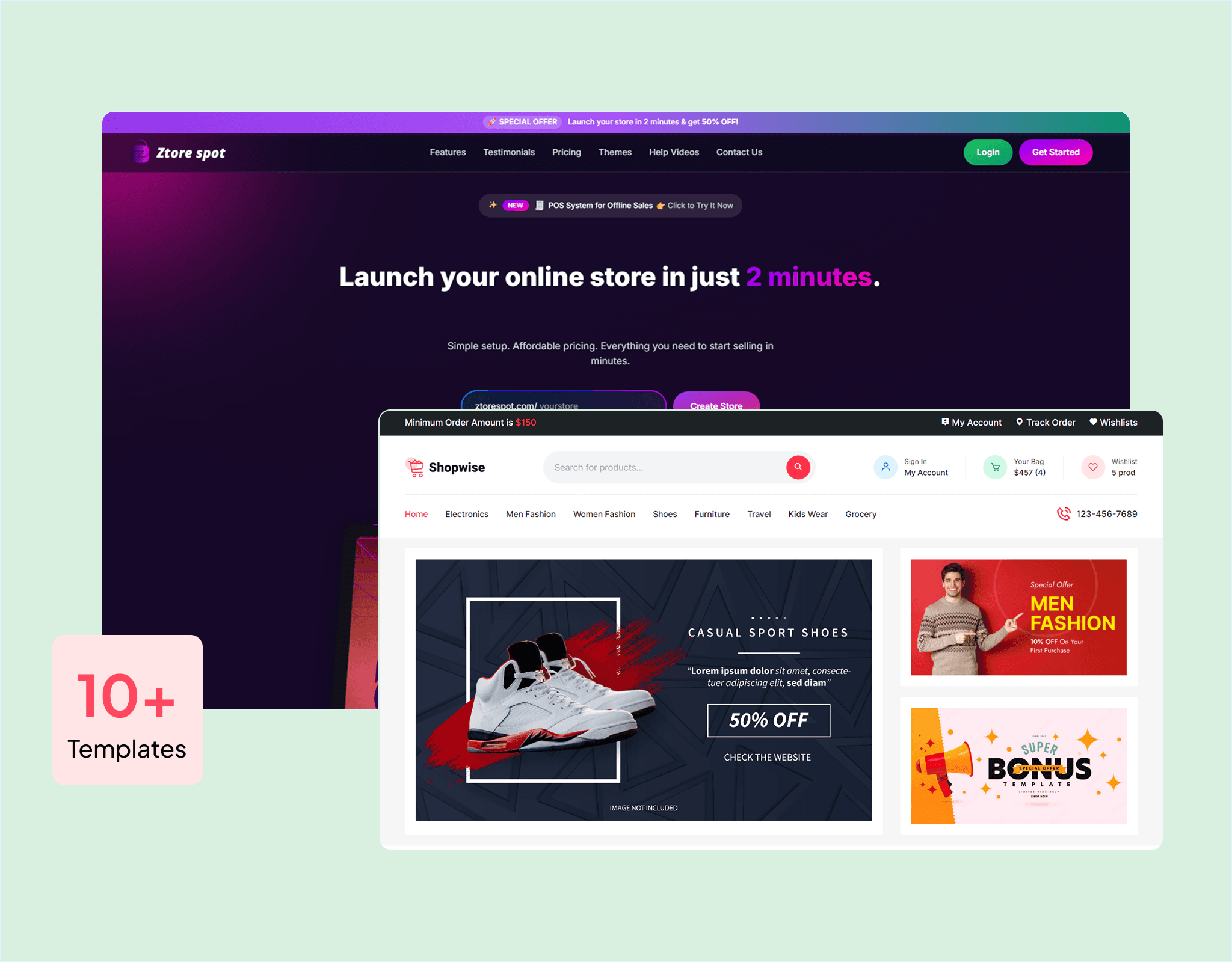
Storefronts, seller dashboards, and platform admin on one SaaS core — with custom domains and 10+ themes out of the box.
- Role
- Solo Full-Stack Developer — platform, seller tooling & storefronts
- Timeline
- Jan 2023 — Present
- Team
- Solo — end to end, design to deployment
- Status
- Live & actively maintained
Overview
What this project is about
Small sellers face a harsh choice: rent space on a marketplace that owns the customer relationship, or pay agency prices for a standalone store they cannot maintain. Neither option grows with them.
I designed and built a multi-tenant commerce platform where each seller gets a full store — dashboard, inventory, orders, and a customizable storefront — while a central admin retains control over sellers, domains, billing, and infrastructure. Sellers launch in hours on a template, then graduate to custom domains and tailored themes as they grow.
Problem
The challenge
Sellers needed marketplace-grade tooling with store-grade independence — and the platform needed to operate all of it efficiently.
- 01
Marketplaces take margin and own the brand experience; standalone builds cost too much to launch and maintain.
- 02
Sellers needed order, inventory, and promotion tooling simple enough to run from a phone.
- 03
The platform needed admin controls for onboarding, moderation, and support across hundreds of stores.
- 04
Storefronts had to look distinct per brand while sharing one maintainable codebase.
Approach
How I built it
The key architectural and product decisions, in the order they were made.
Three-sided product model
Separated concerns into shopper storefronts, seller dashboards, and a platform admin — three apps sharing one tenant-aware API core.
Theme system over one-offs
Built 10+ storefront templates as configuration over shared sections, so new designs ship without forking code per seller.
Domains as data
Treated custom domains as tenant configuration with automated resolution and SSL, so going “pro” is a settings change, not a migration.
Mobile-first seller ops
Prioritized the seller flows that happen on the go — order alerts, stock edits, price changes — with a dedicated mobile experience.
Features
What shipped
Seller dashboards
Orders, products, promotions, and payouts in one workspace built for non-technical sellers.
Platform administration
Tenant onboarding, moderation, support tooling, and platform-wide analytics for operators.
10+ storefront templates
Flexible, brandable themes covering fashion, grocery, electronics, and general retail.
Custom domains
Sellers Graduate from subdomain to their own domain with managed resolution.
Custom mobile site
A tailored mobile storefront experience for the majority-shopper on phones.
Catalog & order engine
Variants, collections, discounts, taxes, and fulfillment states shared across every channel.
Problem solving
Hard parts & trade-offs
Every project has moments where the obvious path breaks. These were the defining ones.
Challenge
One codebase had to render hundreds of visually distinct stores.
Solution
Built a section-based theme engine: shared, tested building blocks composed per template, with per-tenant branding tokens for colors, fonts, and layout density.
Challenge
Seller mistakes (wrong prices, overselling) directly cost revenue.
Solution
Added guardrails in the dashboard — confirmation on destructive actions, stock warnings, and draft-then-publish flows for catalog changes.
Challenge
Supporting hundreds of tenants solo can drown you in support work.
Solution
Invested in the admin console early: tenant lookup for debugging, activity timelines, and bulk operations for onboarding and announcements.
Outcomes
What it achieved
10+
Storefront templates
Sellers launch a distinct, conversion-tuned storefront without custom development.
3 apps
One platform core
Storefront, seller dashboard, and admin share tenant-aware APIs and auth.
7,000+
Active stores
Seller onboarding, store creation, and management running at real marketplace scale.
Live
Seller ecosystem
Real sellers run real catalogs with platform-level support and iteration.
Retrospective
What I took away
A theme engine pays for itself the third time a seller asks for “just a small design change.”
Seller dashboards must be designed for interruption — mobile-first, resumable, and forgiving.
Admin tooling is a feature, not overhead: as a solo developer, it determines how many tenants you can actually serve.